The Era of Agents that Take Action
How computer use is enabling agentic commerce
Agents have been writing code and providing analysis for a few years now. Their ability to get things done outside of software has been more limited. An agent could research a trip, compare hotels, and put together an itinerary, but you still had to open the browser and book it yourself. The last mile was still human.
Better computer use is starting to close that gap. Models are rapidly improving at operating a computer the way a person does: clicking, typing, filling out forms, and working through checkout. Agents can take on more of the everyday tasks we've wanted to hand over, from ordering groceries to booking flights and buying tickets. OpenAI’s recent Astra launch put computer use front and center and there have been reports of OpenAI buying tens of thousands of Mac mini and Mac Studio computers, specifically for training computer use models. Startups like Browserbase, Browser Use, and Kernel are powering computer use for many agents.
You can see this shift in the products getting attention. Instinct, the viral AI personal assistant, is heavily powered by computer use. It works through iMessage, where users can ask it to buy things, find better deals, and handle everyday tasks. People who passed on OpenClaw or Nous Hermes because of the setup and maintenance now have something they can just text. That makes it easier for people to try a personal agent and discover what they'd actually use it for. Grok Bot gives each agent its own cloud computer. People are using it to set up digital employees and assistants with their own jobs and responsibilities. Computer use expands the work these agents can take on. Many of these use cases involve agentic payments and commerce. Instinct and Grok Bot have both integrated with Stripe Link to deliver a smoother, more secure way for agents to check out.
Having an agent complete a purchase for you is a lightbulb moment. You start thinking about what else it could take off your plate. As a result we’re seeing early signs of traction of agentic payments from the consumer perspective. The category just needed a better user experience to hide the complexity behind the scenes. What’s interesting about Instinct is how little the user needs to know about any of this. They text the assistant something they need done. It feels like magic. A lot of teams have been building the infrastructure for agentic commerce but consumer products fill the demand side and give people a reason to use it.
This is also a shift in how people use software. For decades, using an app meant operating it yourself, click by click and screen by screen. A capable agent changes that relationship. You describe the outcome you want and it does the operating, which is why so much of this happens through chat. The assistant becomes the interface and the apps and websites it drives fade into the background.
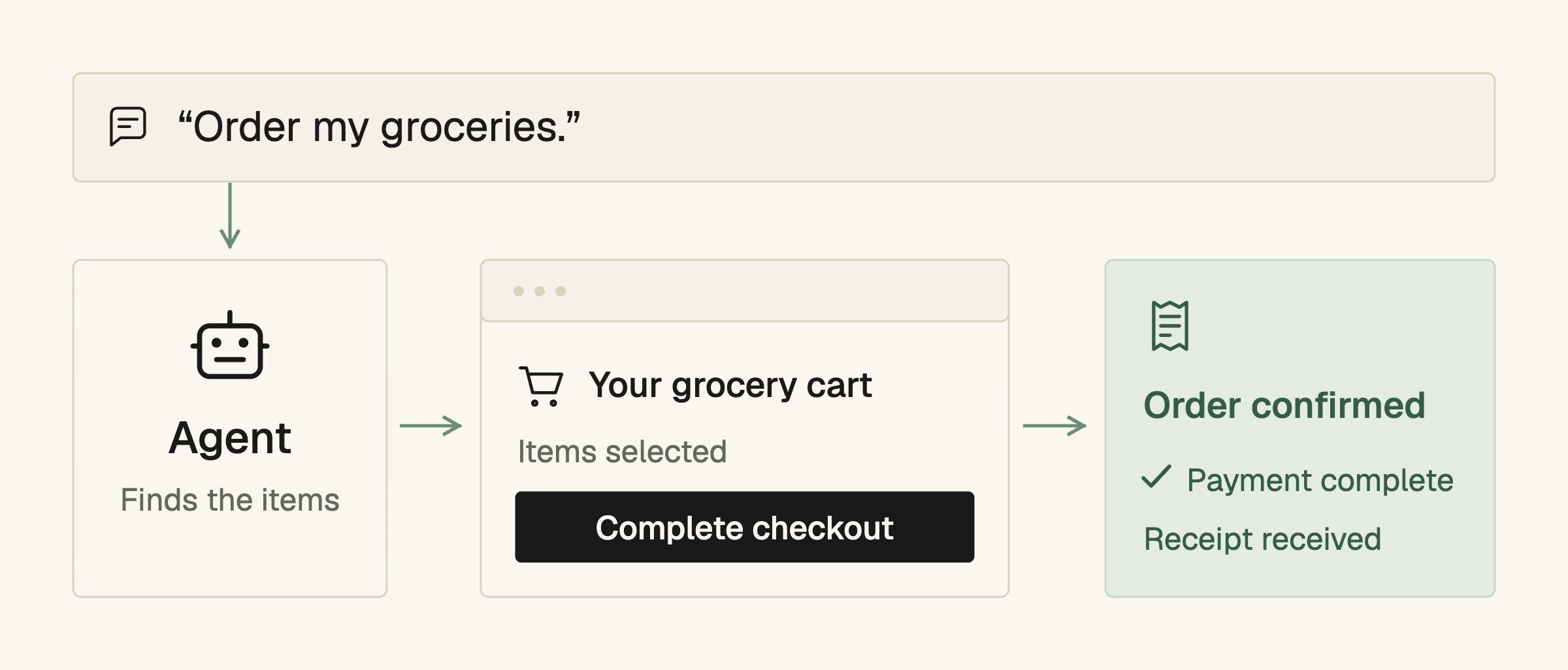
We wrote in The Timeline for Agentic Payments that adoption would move in phases as models (and therefore agents) became more capable. Micropayments between agents and services come first, followed by agents coordinating services in the real world, then broader enterprise applications. Better computer use is helping bring that second stage forward. Personal agents are beginning to participate in the economy through the same websites their users already buy from.
Computer Use Accelerates Agentic Commerce
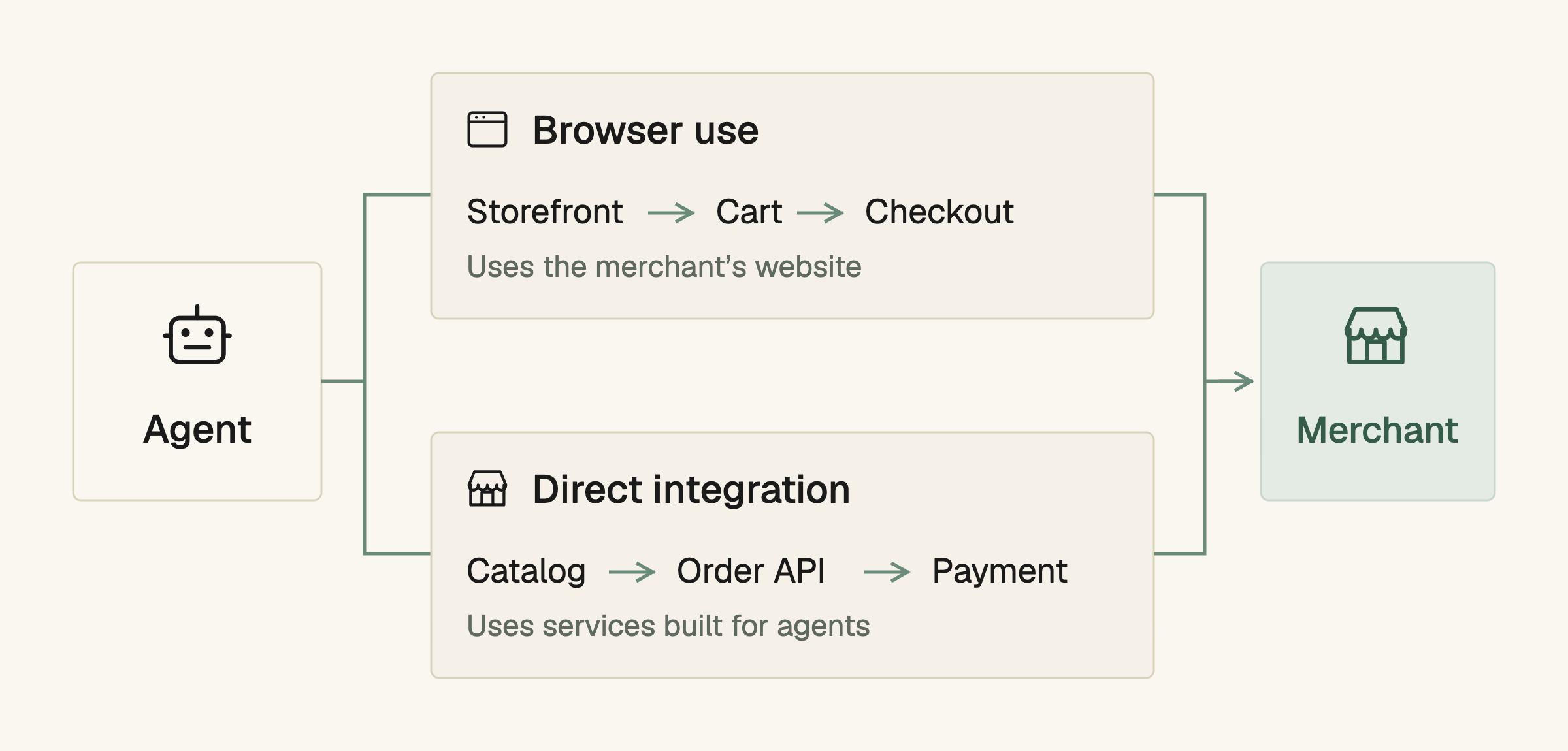
Because computer use gives agents a way to shop on websites that already exist, it’s far less limited than previous iterations of agentic commerce. A merchant doesn't have to adopt a new payment protocol or build an integration before an agent can place an order. The agent can navigate the storefront and work through the checkout a person would use. That expands where agents can spend. Much of the early activity in agentic payments has focused on APIs and digital services designed to accept machine payments. Browser use opens up more of the commerce people already do online, giving builders a way to make useful products while merchants develop better support for agents.
Early agentic commerce was also very top heavy, focused around brokering major partnerships between the major LLMs and retailers. This meant utility was limited by how many merchants OpenAI could sign up, and it was highly permissioned. A lot of time was also spent building protocols that merchants could integrate but there was a lack of agents actually using these protocols to transact. The classic chicken and egg problem that everyone in the space loves to refer to. With computer use, there doesn’t need to be an existing integration or agent optimized catalog for the agent to be able to shop and pay. Instinct and other assistants leveraging computer use have opened this market up.
That said, dedicated protocols and integrations still have a role to play. They can give agents a more direct way to discover products, place orders, and pay. Until then, browser use lets adoption move ahead without waiting for every merchant to support them.
There are still obstacles, including bot protections and payment verification. Reliability will determine how much people use these products. A successful first purchase gets someone interested. Completing transactions consistently and within reasonable boundaries is what makes them keep using the assistant. Consumer trust is difficult to gain and easy to lose, particularly when it involves payments.
There will be another cycle of excitement and skepticism. Some of these products will disappoint people. It won’t all be smooth sailing. But consumer products are how people begin to understand what a technology can do, driving changes in user behavior over time. Paying through an agent will look less like sci-fi and more like just another channel and way for people to do things. This will carry over into the business. The person using an agent to book a trip will start wondering why their company still handles routine purchases manually. Builders will take what works in consumer products and apply it to procurement, payouts, and other business workflows. As we discussed in The Enterprise is the Biggest Opportunity for Agentic Payments, the scale, volume, and value of those transactions will be much larger. Consumer adoption helps people see the possibilities and businesses will need the controls to put them into practice.
The Importance of Trust in Agentic Payments
When an agent starts spending, mistakes become more consequential. Booking the wrong night or paying the wrong person creates a problem the agent needs to fix. Previous helpful interactions are quickly forgotten because of one bad purchase. People hold anything dealing with their money to a higher standard. No interesting agent gets traction if the user doesn't trust it.
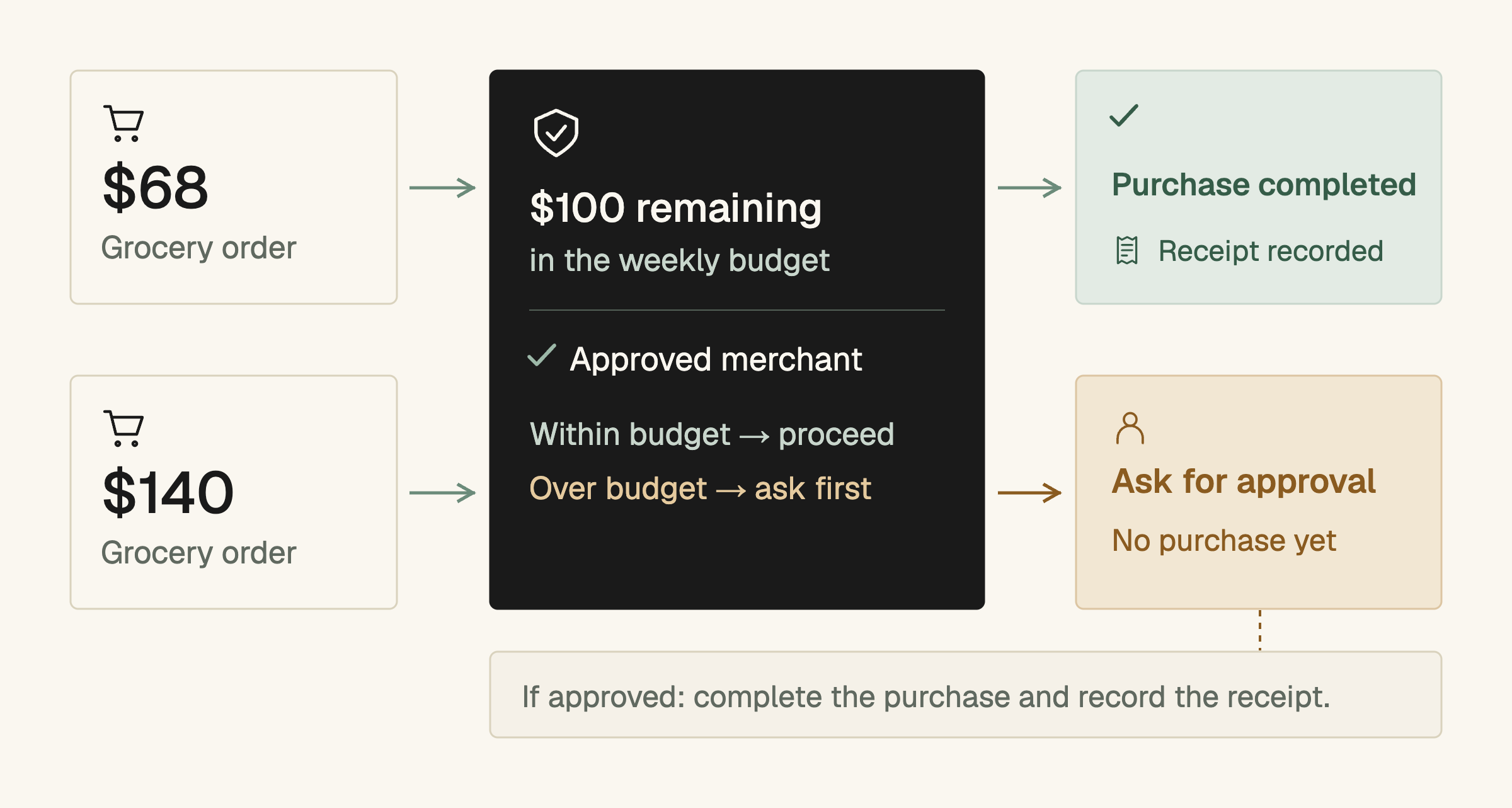
The early state of agentic payments is like the Wild West because the ability to spend is moving faster than the controls around it. Better computer use makes that gap more urgent. An agent that can navigate more websites and complete more purchases needs clear boundaries on what it's allowed to do. Think about what would make you comfortable letting an agent use your card. You'd want to set a budget, choose where it can spend, and decide when it needs to ask you first. An agent could reorder groceries within a weekly limit, for example, while asking for approval before booking a flight. Those rules need to apply before money moves.
The basic requirements are familiar:
- Spending limits that let an agent work within a budget.
- Approvals for large, unusual, or otherwise restricted purchases.
- Controls over which merchants and counterparties it can pay.
- Visibility into what it bought, what it cost, and which approvals were given.
The more people can define those boundaries, the more responsibility they can hand over. If the only choice is to approve every action or give an agent unrestricted access, most people will keep a close watch. Clear controls make it possible to delegate whole tasks with confidence and build trust. Computer use is expanding what agents can do, particularly around payments, and the controls need to catch up.